Bolivia pionero mundial en gobiernos indígenas Parte II. “NUESTRO GOBIERNO NACIÓN URU CHIPAYA APLICA LA PLURINACIONALIDAD”
Por Edgar Ramos Andrade (*) / Dixit-análisis / 16 septiembre 2026 / +591 75801838
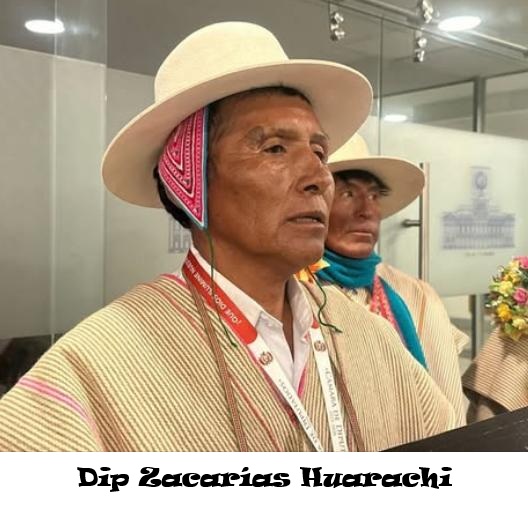
El Gobierno de la Nación Originaria Uru Chipaya, ubicado en el Departamento de Oruro, comenzó a ejercer en enero de 2018, cuando Zacarías Huarachi López asumió como primer Lanqśñi paqh mä eph (máxima autoridad ejecutiva local, en idioma uru chipaya). Desde entonces, pasaron casi nueve años y este 2026 comenzó la tercera gestión de gobierno autónomo indígena. A continuación, presentamos el diálogo sostenido con el diputado Huarachi.
Edgar Ramos Andrade (ERA).- Hoy es 16 de septiembre de 2026 y conversamos con el diputado, Zacarías Huarachi López, del Departamento de Oruro. Fue autoridad máxima del Gobierno Autónomo Indígena Uru Chipaya. Los nueve gobiernos indígenas de Bolivia ya tienen algunos años de ejercicio, hasta ahora en seis Departamentos; solo faltan integrarse en Pando, Tarija y La Paz. Por favor, ¿cómo ve este proceso de conformación gradual de gobiernos indígenas? ¿Cuál es su evaluación de este avance?
Zacarías Huarachi López (ZHL).- Bien, en primer lugar, agradecer por esta entrevista. Como exautoridad y actualmente como diputado puedo comentarle que como Gobierno Autónomo de la Nación Uru Chipaya, ya estamos trabajando en base a nuestro Estatuto Autonómico, o sea que están gobernando ya los gobiernos autónomos de la Nación Originaria Uru Chipaya, con gobierno propio. Antes, las autoridades eran el alcalde y los concejales, pero ahora nuestros legisladores son los Laymis Parla, y nuestra máxima autoridad ejecutiva es el Lanqśñi paqh mä eph. Y como gobierno autónomo indígena llevamos casi nueve años de gestión.
ERA.- ¿Cuántas gestiones ya han tenido en el gobierno indígena Uru Chipaya?
ZHL.- Van tres gestiones. Yo estuve a cargo en la primera gestión de cuatro años, entre 2018 y 2021, y luego la hermana Flora Mamani Felipe, entre 2021 y 2025; ahora, desde enero de 2026, Santiago López Lázaro es la máxima autoridad ejecutiva o Lanqśñi paqh mä eph.
ERA.- ¿Qué dificultades se enfrentaron en la gestión del gobierno indígena Uru Chipaya?
ZHL.- Actualmente no tenemos casi ninguna dificultad, nosotros aplicamos nuestras normas y procedimientos propios. Nosotros, ahí mismo solucionamos nuestros problemas y el pueblo es el que toma la decisión, sea para ejecutar algún proyecto u otros. No es como antes que los concejales decidían solos. Hoy, es el pueblo el que toma la decisión, después se aprueba la ley y lo ejecuta el Lanqśñi paqh mä eph que es nuestra máxima autoridad de gobierno autónomo.
ERA.- ¿Cómo están los casos de cumplimiento de los procedimientos del Estado central, cuando, por ejemplo, se tienen que aplicar en contrataciones en el gobierno indígena, la ley SAFCO o los sistemas de administración del Estado?
ZHL.- Sí, en mi gestión hemos tropezado con dificultades, por ejemplo, con la ley SAFCO, pero ahora ya no. Se está superando eso. El gobierno ya reconoce nuestros procedimientos, ya reconoce el gobierno, además está escrito en la Constitución Política del estado. Entonces, ya conocen los nombres y las normas, ya conocen las autoridades del gobierno autónomo. Bueno pues no hay tanto tropiezo.
ERA.- Como usted indica, es la tercera gestión, ya van tres gestiones, y debe ser uno de los gobiernos indígenas más largos. Entonces, ¿qué desafíos enfrenta el gobierno autónomo de la Nación Uru Chipaya de aquí hacia adelante?
ZHL.- Más que todo nosotros, nuestra potencialidad es el turismo. Nosotros mantenemos nuestro idioma, nuestra vestimenta, nuestra música, mantenemos nuestras costumbres. Entonces, en eso estamos. El turismo es la única sobrevivencia que nosotros podemos gestionar. Yo como diputado también voy a gestionar sobre el caso del turismo.
ERA.- ¿Están llegando turistas a Uru Chipaya?
ZHL.- Sí, están llegando los turistas, pero todos debemos apoyar más. Yo mismo, como diputado estoy gestionando más apoyo, ante organizaciones e instituciones públicas y privadas, las ONGs y otros.
ERA.- ¿En qué necesitan apoyo?
ZHL.- Más que todo, la pandemia del año 2020 nos afectó bastante para que no lleguen turistas. Pero ahora se está regularizando y es casi normal.
ERA.- Existe en el Parlamento una propuesta para reformar al menos 100 artículos de la Constitución, es lo que indicó el expresidente Jorque Quiroga. Y se estaría planteando anular la consulta libre previa, informada y obligatoria a los pueblos indígenas. ¿Cuál es su criterio?
ZHL.- En este momento estamos en Estado de Excepción. No podemos hablar de modificar la Constitución, ni el gobierno puede decir se puede modificar, a no ser que se suspenda ese Estado de excepción. Pero nosotros, como parlamentarios de la Alianza Popular, no estamos de acuerdo. Creo que no se ha superado ni mejorado nada. Tampoco el gobierno ha dado respuesta favorable al pueblo boliviano durante estos tres meses de este estado de Excepción; ¿qué ha mejorado?; debía dar ese informe pero no hay mejoras.
ERA.- ¿Usted estaría de acuerdo con que se elimine de la Constitución la consulta libre previa e informada sobre la explotación de recursos naturales o sobre medidas administrativas que pueden afectar a los pueblos indígenas?
ZHL.- No estoy de acuerdo. Eso puede afectar bastante, inclusive, en nuestro Estatuto Autonómico del Gobierno Indígena Uru Chipaya, está reconocida la consulta previa. Si se modifica la Constitución, nosotros también tendríamos que modificar nuestro Estatuto. No estoy de acuerdo.
ERA.- En Bolivia tenemos nueve gobiernos indígenas, y existe un proyecto en el Senado para constituir el décimo gobierno del pueblo indígena Movima del Beni, pero no hemos visto en otros países, como México, Ecuador, Perú, donde hay fuerte movimiento de organizaciones y pueblos indígenas, que hayan constituido gobiernos indígenas. Bolivia es el primero que da este paso. En esos países, los indígenas, reclaman, protestan, exigen, pero no han pasado el nivel de gobierno. ¿Cómo lo ve usted?
ZHL.- La propuesta de gobiernos indígenas fue lanzada por el entonces presidente Evo Morales, por eso las naciones indígenas existen ahora como gobierno, como el caso nuestro, somos Gobierno de la Nación Indígena Uru Chipaya, ¿Por qué Nación? Hay varios idiomas que existen en Bolivia, y son diversos; por eso es. Por eso nosotros estamos reconocidos como Estado Plurinacional. Por tanto, nosotros aplicamos la plurinacionalidad.
ERA.- ¿Tendríamos que esperar a que más pueblos indígenas se conviertan en gobiernos indígenas?
ZHL.- Así sería. Yo como pueblo indígena no quisiera discriminar a nadie. De repente están pensando mal algunas personas, por ejemplo, por ahí piensan que al formar un gobierno indígena con autonomía es para discriminar, pero no es así. Yo como diputado indígena no discriminaría a nadie porque todos somos bolivianos. FIN
(*) Edgar Ramos Andrade. Escritor decolonial, autor de “Bolivia pionero mundial en gobiernos indígenas” y, director del “Curso de Formación Política y Ciudadanía Activa”. +591 75801838 chaco.amazonia@gmail.com
= = =
English
Please, if you could share the following interview. Thank you.
Bolivia, a world pioneer in Indigenous governments, Part II: “OUR URU CHIPAYA NATION GOVERNMENT IMPLEMENTS PLURINATIONALITY”
By Edgar Ramos Andrade (*) / Dixit-analysis / September 16, 2026 / +591 75801838
The Government of the Uru Chipaya Indigenous Nation, located in the Department of Oruro, began its term in January 2018, when Zacarías Huarachi López assumed the position of first Lanqśñi paqh mä eph (highest local executive authority, in the Uru Chipaya language). Almost nine years have passed since then, and in 2026, the third term of this autonomous Indigenous government began. Below, we present the dialogue held with Representative Huarachi.
Edgar Ramos Andrade (ERA) - Today is September 16, 2026, and we soke with Representative Zacarías Huarachi López, from the Department of Oruro. He was the highest authority of the Uru Chipaya Indigenous Autonomous Government. The nine indigenous governments of Bolivia have been in operation for several years now, currently in six departments; only Pando, Tarija, and La Paz remain to be integrated. Please, how do you see this process of gradual formation of indigenous governments? What is your assessment of this progress?
Zacarías Huarachi López (ZHL): Well, first of all, thank you for this interview. As a former authority and currently as a member of parliament, I can tell you that as the Autonomous Government of the Uru Chipaya Nation, we are already working based on our Autonomy Statute. That is to say, the autonomous governments of the Uru Chipaya Indigenous Nation are already governing, with their own government. Before, the authorities were the mayor and the council members, but now our legislators are the Laymis Parla, and our highest executive authority is the Lanqśñi paqh mä eph. And as an indigenous autonomous government, we have been in office for almost nine years.
ERA.- How many administrations have you had in the Uru Chipaya indigenous government?
ZHL.- There have been three administrations. I was in charge during the first four-year term, between 2018 and 2021, and then Sister Flora Mamani Felipe, between 2021 and 2025; now, since January 2026, Santiago López Lázaro is the highest executive authority or Lanqśñi paqh mä eph.
ERA: What difficulties did you face in managing the Uru Chipaya Indigenous government?
ZHL: Currently, we have almost no difficulties. We apply our own rules and procedures. We resolve our problems ourselves, and the people make the decisions, whether it's to carry out a project or something else. It's not like before when the council members decided on their own. Today, the people make the decision, then the law is approved, and it's implemented by the Lanqśñi paqh mä eph, who is our highest authority in the autonomous government.
ERA: How are the cases of compliance with central government procedures, for example, when they have to be applied in contracts within the Indigenous government, such as the SAFCO law or the state's administrative systems?
ZHL: Yes, during my administration, we encountered difficulties, for example, with the SAFCO law, but not anymore. That's being overcome. The government now recognizes our procedures; it recognizes the government, and it's also written in the Political Constitution of the State. So, they already know the names and the rules, they already know the authorities of the autonomous government. Well, there aren't many obstacles.
ERA: As you indicate, this is the third administration, three administrations already, and it must be one of the longest-running indigenous governments. So, what challenges does the autonomous government of the Uru Chipaya Nation face going forward?
ZHL: More than anything, our potential lies in tourism. We maintain our language, our clothing, our music, we maintain our customs. So, that's what we're focused on. Tourism is the only means of survival we can manage. As a representative, I will also advocate for tourism.
ERA: Are tourists arriving in Uru Chipaya?
ZHL: Yes, tourists are arriving, but we all need to provide more support. I myself, as a representative, am seeking more support from public and private organizations and institutions, NGOs, and others.
ERA: What kind of support do you need?
ZHL: More than anything, the 2020 pandemic affected us quite a bit, preventing tourists from arriving. But now things are stabilizing and are almost back to normal.
ERA: There's a proposal in Parliament to reform at least 100 articles of the Constitution, as indicated by former President Jorge Quiroga. And it's being considered to annul the free, prior, informed, and mandatory consultation with Indigenous peoples. What's your opinion?
ZHL: Right now, we're under a State of Emergency. We can't talk about modifying the Constitution, nor can the government say it can be modified, unless this State of Emergency is suspended. But we, as members of Parliament from the Popular Alliance, don't agree. I don't think anything has been overcome or improved. Nor has the government given a favorable response to the Bolivian people during these three months of this State of Emergency; what has improved? They were supposed to give that report, but there are no improvements.
ERA: Would you agree to eliminate from the Constitution the requirement for free, prior, and informed consultation regarding the exploitation of natural resources or administrative measures that may affect Indigenous peoples?
ZHL: I do not agree. That could have a significant impact, even in our Autonomy Statute of the Uru Chipaya Indigenous Government, where prior consultation is recognized. If the Constitution is amended, we would also have to amend our Statute. I do not agree.
ERA: In Bolivia, we have nine Indigenous governments, and there is a bill in the Senate to establish a tenth government for the Movima Indigenous people of Beni. However, we haven't seen Indigenous governments established in other countries, such as Mexico, Ecuador, and Peru, where there is a strong movement of Indigenous organizations and peoples. Bolivia is the first to take this step. In those countries, Indigenous people make demands, protest, and make claims, but they haven't yet reached the level of government. What is your perspective on this?
ZHL: The proposal for Indigenous governments was launched by then-President Evo Morales, which is why Indigenous nations now exist as governments, as in our case. We are the Government of the Uru Chipaya Indigenous Nation. Why "Nation"? There are several languages spoken in Bolivia, and they are diverse; that's why. That's why we are recognized as a Plurinational State. Therefore, we implement plurinationality.
ERA: Would we have to wait for more Indigenous peoples to become Indigenous governments?
ZHL: That would be the case. As an Indigenous person, I wouldn't want to discriminate against anyone. Perhaps some people are misunderstanding this; for example, they might think that forming an autonomous Indigenous government is a way to discriminate, but that's not the case. As an Indigenous representative, I wouldn't discriminate against anyone because we are all Bolivians. END
Edgar Ramos Andrade. Decolonial writer, author of “Bolivia: A World Pioneer in Indigenous Governments” and director of the “Course on Political Training and Active Citizenship.” +591 75801838 chaco.amazonia@gmail.com